Say "robot" and most people picture a humanoid machine walking around, or a mechanical arm welding car parts on a dark factory floor. That image isn't wrong, exactly, but it's incomplete. In 2026, the more interesting question isn't "are robots taking over," it's "who's actually buying them, and for what."
According to the International Federation of Robotics' (IFR) World Robotics 2025 report, 542,000 new industrial robots were installed worldwide in 2024, bringing the total operating stock to roughly 4.66 million units — more than double what it was ten years earlier. Manufacturing still leads by a wide margin, but healthcare is closing the gap faster than almost anyone expected, and logistics isn't far behind. Here's what the data actually shows.
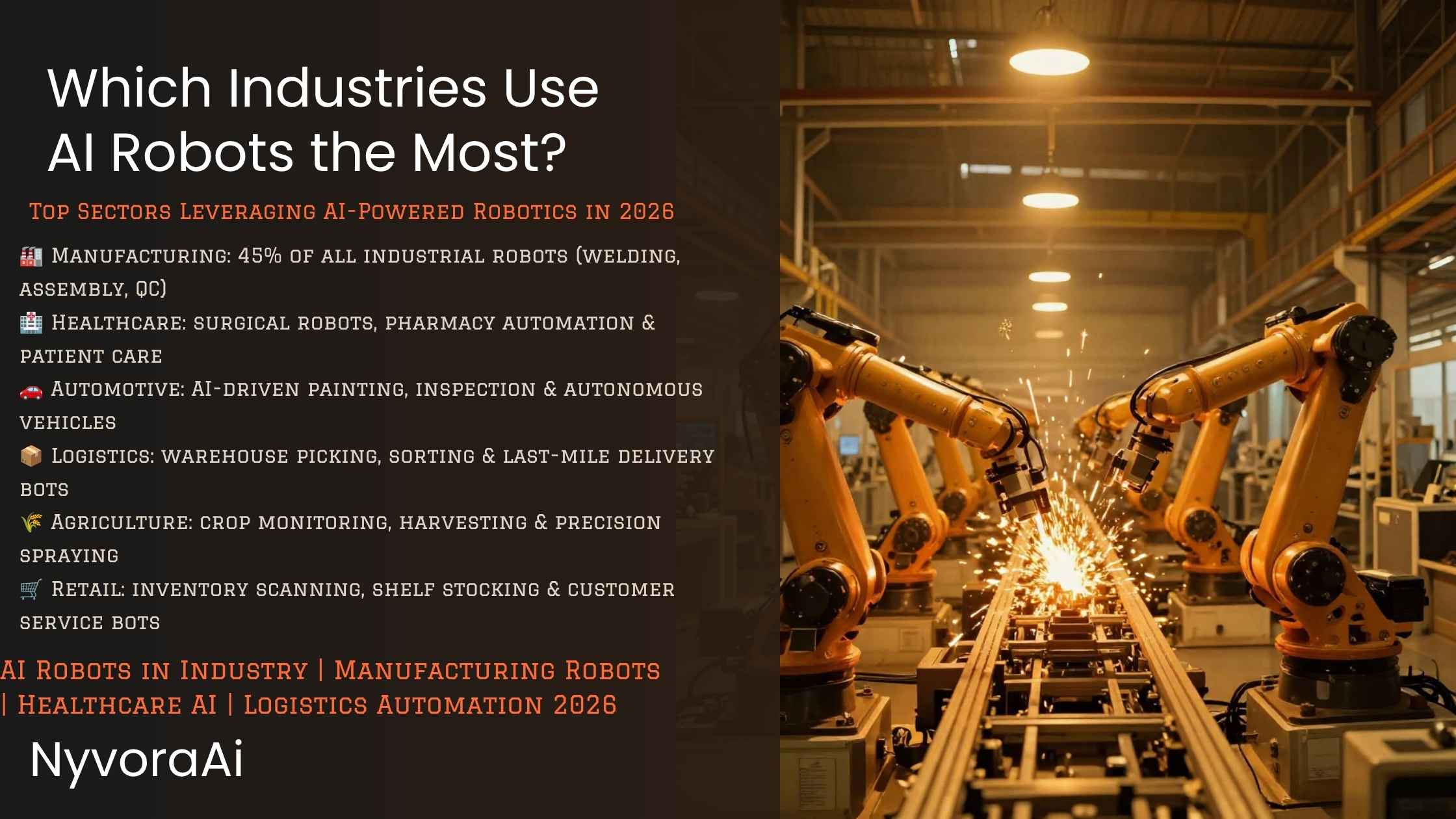
- Manufacturing: Still the largest user by installed volume, though electronics manufacturing overtook automotive for the top spot in 2024, per IFR data.
- Healthcare: The fastest-growing segment — medical robot installations jumped sharply in 2024, led by surgical and rehabilitation robots.
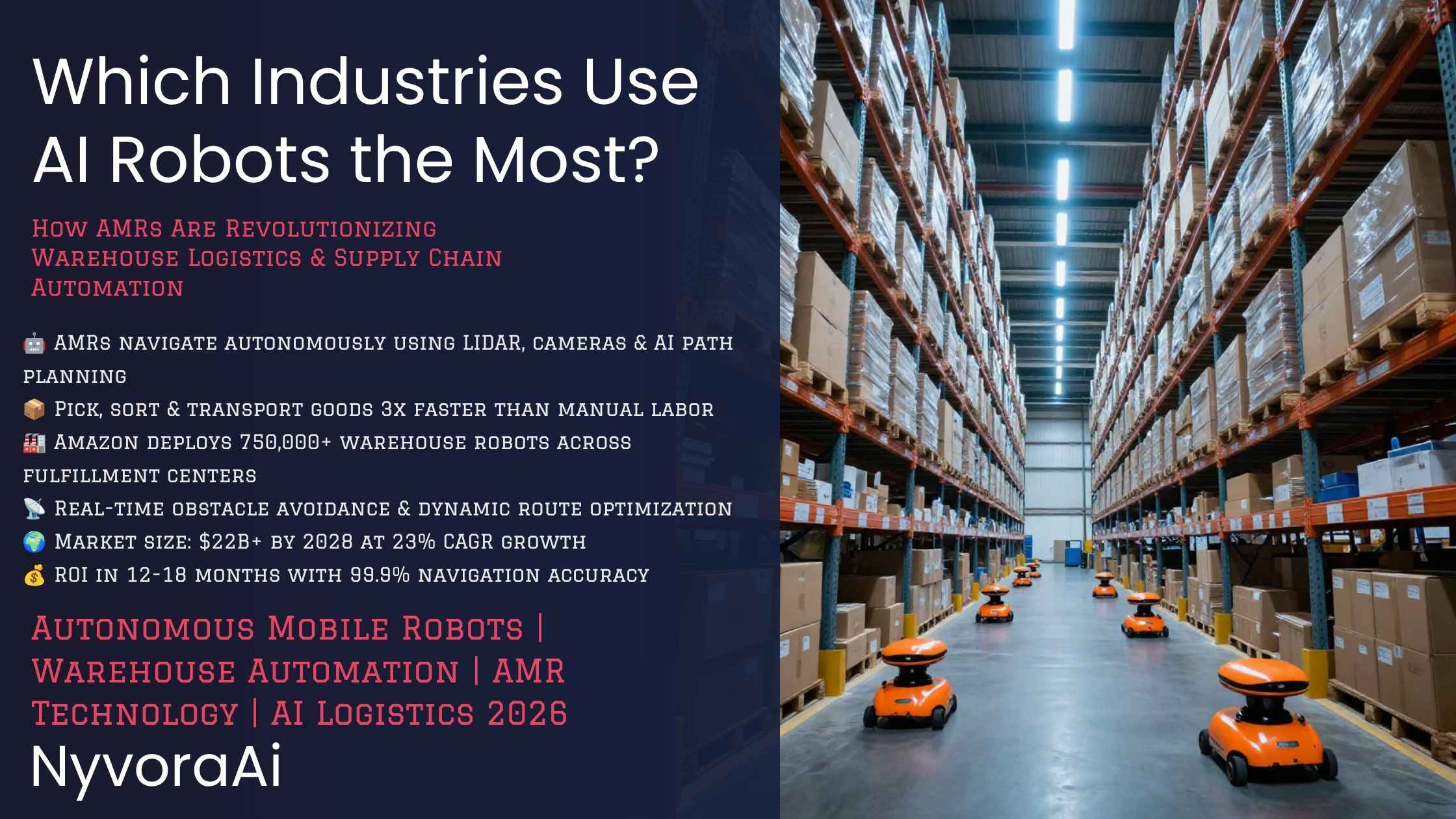
- Logistics & Warehousing: E-commerce operators rely heavily on autonomous mobile robots (AMRs) for sorting, picking, and transport.
- Agriculture: Precision-ag technology is a real and growing category, though robot installation numbers in this sector have actually been uneven year to year, not a smooth upward line.
- Retail & Hospitality: A smaller but growing use case, mostly cleaning and inventory robots rather than customer-facing ones.
01 Manufacturing: Still the Biggest User, With a Twist
Manufacturing is where industrial robotics started, and it's still where most of the volume is. But there's a genuine shift happening within the sector: according to IFR's 2025 report, electronics manufacturing overtook automotive as the industry installing the most robots in 2024 — a changeover that would have seemed unlikely a decade ago, when car plants were the default image of a "robot factory."
The Rise of the "Cobot"
A big part of the shift is the move toward collaborative robots, or "cobots." Unlike older industrial arms that had to be caged off for safety, cobots use sensors and software to detect when a person is nearby and slow down or stop before contact happens, so they can work on the same line as human employees. Industry data compiled by automation researchers puts the average payback period on cobot investments at well under a year in many deployments — a big change from the multi-year paybacks industrial robots used to require.
Computer Vision for Quality Control
Computer vision has also changed quality control on the line. Cameras paired with machine learning models can catch defects in circuit boards or welds that are hard for a human eye to reliably spot, and they can do it at production speed rather than sampling a subset of units. That's a big part of why electronics has become such a heavy adopter — the tolerances are tight and the volumes are huge.
02 Healthcare: Precision, Logistics, and Care
Healthcare is the fastest-growing segment in robotics right now, and the growth is broad-based rather than concentrated in one niche. IFR's 2025 report recorded 16,700 new medical robot installations in 2024 alone — a 91% jump — with surgical robots up 41%, rehabilitation robots up 106%, and diagnostic/lab robots up 610% off a smaller base. The applications range from life-saving surgery to the far less glamorous job of moving laundry carts around a hospital.
03 Logistics, Warehousing & Delivery
E-commerce volume has pushed warehousing toward heavy automation. Modern fulfillment centers increasingly look less like aisles that humans walk up and down, and more like a coordinated system where robots bring the shelf to the person instead of the other way around.
The Warehouse Fleet
Large e-commerce operators run fleets of autonomous mobile robots that carry entire shelving units to human packers, with routing software managing traffic so robots don't collide and popular items stay positioned for fast retrieval. IFR data shows transport and logistics robots as one of the faster-growing service robot categories, alongside cleaning and security robots.
Last-Mile Delivery
Automation is also creeping into the final leg of delivery — sidewalk robots, delivery drones, and autonomous vans are all in active testing and limited deployment in various markets. If you want more detail on the aerial side specifically, see our piece on how drones are using AI for delivery.
04 Agriculture: A More Uneven Story Than the Headlines Suggest
Precision agriculture is a real and growing field — GPS-guided tractors, computer-vision harvesters, and targeted weeding tools are all in active commercial use. But it's worth being honest about the data here: IFR's most recent World Robotics report actually recorded a slight decline in agricultural robot installations year-over-year, even as overall service robotics grew. Adoption in farming tends to be uneven — it depends heavily on crop type, farm size, and regional labor costs — rather than a smooth upward curve.
- Autonomous tractors: GPS- and AI-guided tractors can plant and till fields with tight positioning accuracy, cutting down on overlap and wasted fuel or seed.
- Robotic harvesters: Vision-guided arms can identify ripe produce like strawberries and pick with less bruising than earlier automated pickers, addressing labor shortages in harvest-heavy crops.
- Precision weeding: Some systems use computer vision to tell crops from weeds and apply a targeted laser or micro-dose of herbicide instead of blanket spraying a whole field.
This is a simplified planning tool using the numbers you enter — it doesn't include maintenance, downtime, training, or integration costs. Real-world industrial robot payback periods have generally ranged from well under a year to a few years depending on application and sector, according to automation industry benchmarking. Treat this as a starting point for your own analysis, not a guarantee.
05 The Cost Barrier: Who Can Actually Afford This?
The benefits are real, but cost has historically kept advanced robotics limited to large companies. A hospital-grade surgical system or a warehouse fleet of AMRs can run into the millions. That said, the barrier is coming down.
"Robotics-as-a-Service" arrangements now let small and mid-sized manufacturers lease cobots for a monthly fee rather than a large upfront purchase, similar to a software subscription. For a deeper dive into the actual price ranges involved, see our guide on how much an AI robot costs in 2026.
06 Consumer vs. Industrial: A Different Kind of Robot Entirely
It's easy to lump "robots" together, but an industrial arm and a Kickstarter home robot have almost nothing in common under the hood. If you want the fuller breakdown, our explainer on the difference between AI and a robot covers it in more depth. In short: industrial robots are optimized for precision, payload, and speed in a controlled environment. Consumer robots are optimized for safety and adaptability in a messy, unpredictable one — your living room, not a factory floor.
The Home Frontier
Robot vacuums have been mainstream for years, but robots that reliably fold laundry or load a dishwasher in a real home are still early-stage technology, not a finished product on store shelves. For a grounded take on where things actually stand, see can AI robots do household chores yet. Short version: some narrow tasks are handled well, but the unpredictability of a lived-in home is still a hard problem.
07 Where This Is Heading
The sectors leading today are likely just the early adopters. As general-purpose AI models get better at understanding physical environments and hardware costs keep falling, robotics will show up in more corners of the economy than it does now.
A lot of current research is focused on what's often called "embodied AI" — robots that can reason about an unfamiliar physical space rather than just following a pre-mapped path. That's a meaningfully harder problem than warehouse navigation, and it's still mostly in the research and pilot stage rather than commercial deployment. For more on where that research stands, see our guide on the future of AI robotics.
08 Frequently Asked Questions
Which industries use AI robots the most?
Why is manufacturing the largest user of AI robots?
How are AI robots used in healthcare?
Are AI robots expensive for small businesses?
What's the difference between industrial and consumer AI robots?
Will AI robots replace human workers in these industries?
Sources & Further Reading

Written by the NyvoraAI Team
We track AI, robotics, and industry adoption trends and try to keep our numbers honestly sourced. This guide was updated in June 2026. Have questions? Contact our team or learn more about our mission.