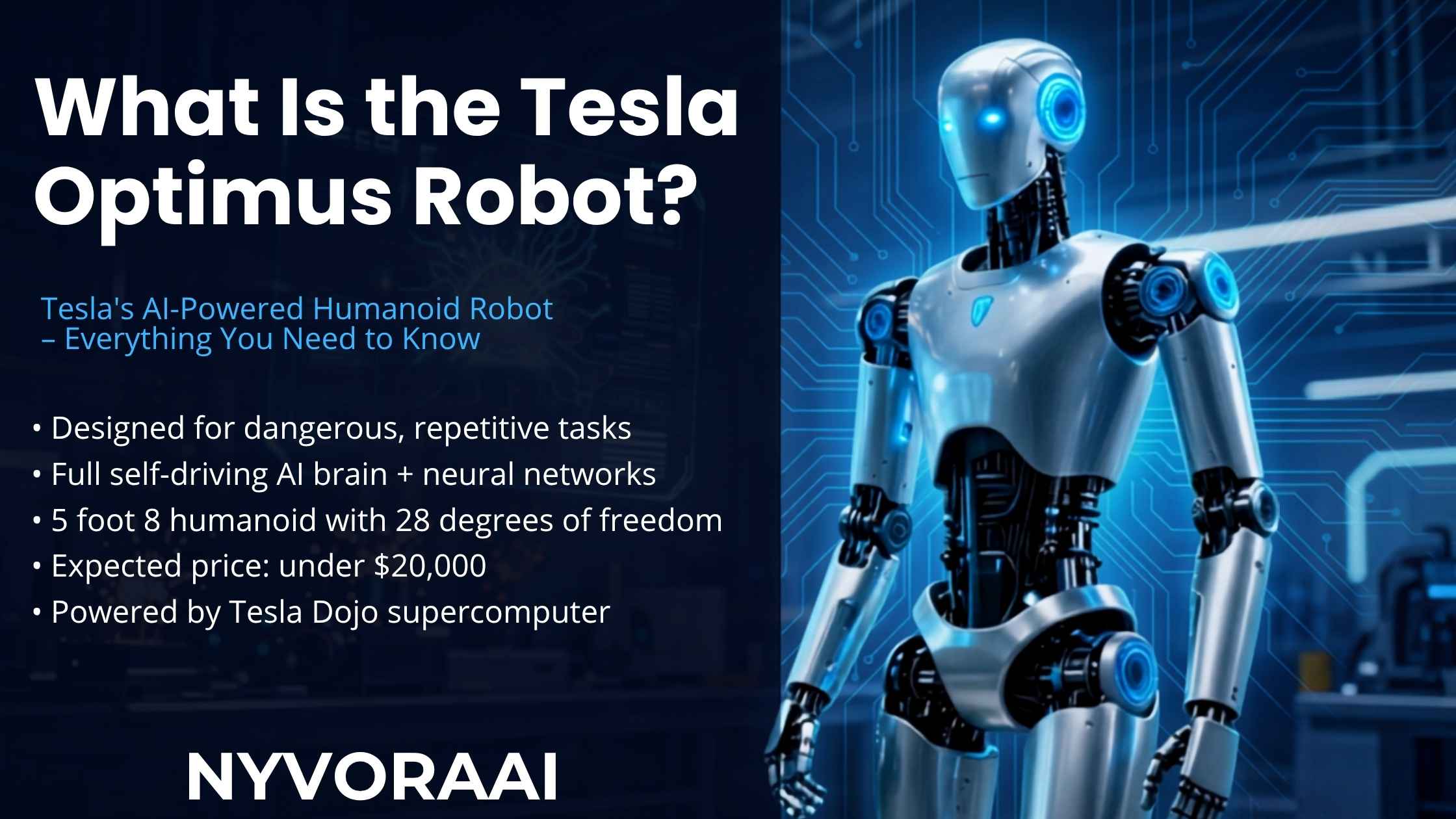
Remember when Tesla was just a car company? Those days are firmly in the rearview mirror. Back in 2021, Elon Musk announced something that sounded like it was ripped straight from a sci-fi script: Tesla was building a humanoid robot. Fast forward to 2026, and that robot—named Optimus—is no longer just a flashy concept. It is walking, working, and proving that the future of practical robotics isn't just coming; it is already here.
So, what is the Tesla Optimus robot exactly? In the simplest terms, it is a general-purpose humanoid robot built to handle the tasks that are dangerous, repetitive, or simply too boring for humans. Think of it as a highly capable robotic assistant designed for factories, warehouses, and eventually, our own homes. But unlike traditional industrial robots that are bolted to the floor and programmed for a single, rigid task, Optimus is built to be versatile, mobile, and genuinely intelligent.
What makes Optimus particularly fascinating is its pedigree. It is not being built by a legacy robotics firm. It is being developed by Tesla—the same company that revolutionized electric vehicles and autonomous driving. This means Optimus directly benefits from Tesla's massive, battle-tested investments in artificial intelligence, battery technology, and manufacturing efficiency. If you are curious about how AI and robotics are connected, Optimus is the ultimate real-world case study.
- What it is: A general-purpose humanoid robot designed to automate tasks humans prefer not to do.
- Height/Weight: 5'8" (173 cm) tall, weighing 125 lbs (57 kg).
- Price Target: Under $20,000 when mass-produced.
- Key Tech: Powered by Tesla's Full Self-Driving (FSD) AI, custom actuators, and advanced vision sensors.
- Status: Gen 2 prototypes actively working in Tesla factories as of 2024–2025.
- Availability: Limited commercial release expected in 2026–2027, with mass production scaling in 2028–2029.
01 What Exactly Is the Tesla Optimus Robot?
The Tesla Optimus (also known as the Tesla Bot) represents Elon Musk's vision for a future where humanoid robots handle the labor that humans find undesirable or unsafe. Announced at Tesla's AI Day in August 2021, Optimus was initially met with healthy skepticism. Many dismissed it as another ambitious Musk moonshot that would never leave the rendering studio. However, Tesla has consistently delivered tangible progress updates, evolving the project from a person in a foam suit to a fully functional, autonomous prototype.
The Vision Behind Optimus
Musk has boldly suggested that Optimus could eventually become more significant than Tesla’s automotive business. The reasoning is refreshingly simple: there are far more tasks that need doing in the world than there are humans willing or able to do them. From manufacturing and logistics to elder care and household chores, the potential applications are virtually limitless.
Unlike specialized robots designed for a single purpose (like the robotic arms welding cars on an assembly line), Optimus is built to be general-purpose. It has a human-like form—two arms, two legs, a torso, and a head—because the world is already built for humans. Doors, tools, staircases, and workstations are all designed around human dimensions. By creating a robot that matches human form, Tesla avoids the need to rebuild the entire world to accommodate machines.
To understand more about what a humanoid robot is in simple terms, think of Optimus as a machine designed to fit seamlessly into human environments and perform human-scale tasks.
02 Tesla Optimus: Technical Specifications
Tesla has revealed detailed specifications for Optimus, particularly with the Gen 2 prototype unveiled in late 2023. Here is what we know about the hardware:
Key Components Explained
- Actuators: Optimus uses custom-designed electric actuators developed in-house by Tesla. These are essentially advanced motors that provide precise movement and strength. The Gen 2 version features improved actuators with better torque and energy efficiency.
- Sensors: The robot is equipped with cameras, force sensors, and proprioceptive sensors that tell it exactly where its limbs are in space—similar to how you know where your arm is without having to look at it.
- AI Brain: Optimus runs on Tesla's Full Self-Driving (FSD) computer and AI software. This means it leverages the same neural networks that power Tesla's autonomous vehicles, adapted for humanoid movement and complex task execution.
- Hands: Gen 2 features highly dexterous hands with 11 degrees of freedom, capable of delicate tasks like gently handling an egg or using standard human tools.
- Battery: A custom battery pack provides all-day operation on a single charge, leveraging Tesla's world-class expertise in battery technology.
03 Development Timeline: From Concept to Reality
Tesla's development of Optimus has been remarkably fast, especially considering the sheer complexity of building a general-purpose humanoid robot from scratch. Here is how the project has evolved:
Elon Musk announces the Tesla Bot at AI Day. A person in a robot suit demonstrates the concept, generating both excitement and widespread skepticism.
Tesla reveals the first working prototype at AI Day 2022. The robot can walk slowly, wave, and perform basic, scripted movements.
Tesla unveils Gen 2 with major, visible improvements: 30% faster walking, better dynamic balance, tactile sensing in the hands, and the ability to sort objects by color.
Optimus robots begin limited, real-world testing in Tesla's own factories, performing tasks like battery cell sorting and basic assembly work.
Expected initial availability for select business customers, particularly in the manufacturing and logistics sectors.
Tesla aims to achieve mass production, with the goal of making Optimus widely available and genuinely affordable.
04 What Can Tesla Optimus Actually Do?
As of 2026, Tesla Optimus has demonstrated a range of capabilities that show genuine, measurable progress, though it is still far from the fully autonomous, general-purpose robot of science fiction. Here is what it can currently do:
Current Capabilities (2026)
- Walking and Navigation: Optimus can walk on flat surfaces, navigate around obstacles, and maintain its balance even when pushed or on slightly uneven terrain.
- Object Manipulation: The robot can pick up objects, sort them by color or type, and place them in designated locations. It has been shown gently handling fragile items like eggs without breaking them.
- Basic Assembly Tasks: In Tesla factories, Optimus prototypes are actively testing simple assembly tasks, such as installing battery cells or sorting components.
- Tool Use: Gen 2's improved hands can grip and use basic tools, opening up possibilities for maintenance and light repair work.
- Autonomous Operation: Using Tesla's FSD AI, Optimus can navigate factory floors and workspaces without constant, direct human direction.
Planned Future Capabilities
- Complex Manufacturing: Performing intricate assembly work currently done by human workers.
- Warehouse Logistics: Picking, packing, and organizing inventory in large distribution centers.
- Household Tasks: Eventually handling chores like cooking, cleaning, and laundry (though this is likely still years away).
- Elder Care: Assisting elderly or disabled individuals with daily, physical activities.
- Dangerous Work: Handling hazardous materials, working in extreme environments, or performing disaster response tasks.
It is important to note that while these capabilities are impressive, Optimus is still in active development. The robot shown in demos is often performing pre-programmed tasks or operating in highly controlled environments. True general-purpose autonomy—where the robot can adapt to any unpredictable situation like a human—remains a work in progress.
05 How Does Tesla Optimus Work?
This is where Tesla’s unique background gives it a massive edge. The technology behind Optimus leverages several key innovations that Tesla has already been developing and refining for its vehicles:
Artificial Intelligence & Neural Networks
Optimus uses the same foundational AI architecture as Tesla's Full Self-Driving system. This means it relies on neural networks trained on massive amounts of data to understand its environment and make real-time decisions. Crucially, the robot uses vision-based AI (cameras) rather than expensive LIDAR sensors, keeping hardware costs down while maintaining high capability.
The AI is trained using a powerful combination of simulation and real-world data. Tesla can run millions of hours of training in virtual environments before testing in the physical world, dramatically accelerating development. If you are interested in how robots learn from humans by watching, Tesla is pioneering this exact approach with Optimus.
Custom Actuators and Motors
One of Optimus's biggest innovations is Tesla's custom actuator design. Traditional humanoid robots use expensive, off-the-shelf motors that can cost thousands of dollars each. Tesla designed its own actuators specifically for Optimus, optimizing for strength, efficiency, and cost. This is absolutely crucial for achieving the sub-$20,000 price target.
Battery Technology
Optimus uses battery technology directly derived from Tesla's automotive division. The robot's battery pack is designed to provide all-day operation while keeping weight manageable. Tesla's deep expertise in battery management systems ensures efficient power usage and strict safety protocols.
Manufacturing Efficiency
Perhaps most importantly, Tesla is applying its legendary manufacturing expertise to robot production. The company already knows how to build complex, high-tech products at scale and low cost. This manufacturing prowess is what makes the aggressive pricing realistic, rather than just a marketing promise.
06 Price and Availability: When Can You Buy One?
Let’s address the elephant in the room: the price tag. Elon Musk has repeatedly stated that Optimus will cost less than $20,000 when it reaches mass production. To put that in perspective, that is less than the average price of a new car in the United States.
Pricing Strategy
The sub-$20,000 price point isn't arbitrary. Musk believes that at this price, Optimus will be significantly more economical than human labor for many tasks. If a robot costs $20,000 and can work reliably for 5 to 10 years, that is drastically cheaper than paying human wages, benefits, and dealing with turnover.
Availability Timeline
- 2024–2025: Internal testing at Tesla factories.
- 2026–2027: Limited commercial availability for select business customers.
- 2028–2029: Mass production and wider commercial availability.
- 2030+: Potential consumer availability for household use.
However, these timelines should always be taken with a grain of salt. Tesla has a well-documented history of optimistic delivery dates, and robotics is significantly more complex than automotive manufacturing. Delays are highly likely.
07 How Does Optimus Compare to Competitors?
Tesla isn't the only company racing to build the ultimate humanoid robot. Here is how Optimus stacks up against the current competition:
| Robot | Company | Price | Status | Key Difference |
|---|---|---|---|---|
| Optimus | Tesla | <$20k (target) | Factory testing | Lowest cost, FSD AI integration |
| Atlas | Boston Dynamics | $2M+ (est.) | Research/Demo | Most agile, parkour capable |
| Figure 01 | Figure AI | Unknown | Early testing | Strong OpenAI partnership |
| ASIMO | Honda | Discontinued | N/A | Historical pioneer, but limited |
To learn more about the competitive landscape, check out our guides on what Boston Dynamics is doing with AI and how the Figure AI robot works.
Tesla's main advantage is cost and manufacturing scale. While Boston Dynamics makes undeniably more agile robots, they are prohibitively expensive for widespread commercial use. Tesla's bet is that "good-enough" performance at a fraction of the price will ultimately win the market.
08 The Societal Impact: Promise and Concerns
The rapid development of humanoid robots like Optimus raises important, deeply human questions about the future of work, society, and our relationship with technology.
The Promise
- Economic Productivity: Robots could handle dangerous, dirty, and dull jobs, freeing humans to focus on more creative, strategic, and fulfilling work.
- Aging Population Support: In countries with shrinking workforces, robots could fill critical labor gaps and assist elderly citizens with daily living.
- Cost Reduction: Cheaper labor could theoretically reduce the cost of everyday goods and services.
- Safety: Robots could work in hazardous environments, drastically reducing workplace injuries and fatalities.
The Concerns
- Job Displacement: Millions of workers in manufacturing, logistics, and service industries could face unemployment or forced career transitions.
- Economic Inequality: The financial benefits of robot labor might accrue primarily to robot owners and corporations, rather than everyday workers.
- Safety and Control: Ensuring robots behave predictably and safely around humans is a massive technical and ethical challenge.
- Privacy: Robots equipped with cameras and sensors in homes and workplaces raise legitimate surveillance and data privacy concerns.
These aren't hypothetical, sci-fi concerns. They are real, pressing challenges that society, policymakers, and technologists will need to address together as robots like Optimus become more capable and widespread.
09 Frequently Asked Questions
What is the Tesla Optimus robot?
How much will Tesla Optimus cost?
When will Tesla Optimus be available?
What can Tesla Optimus do?
Is Tesla Optimus better than Boston Dynamics Atlas?
Will Tesla Optimus replace human workers?
How is Tesla Optimus powered?

Written by the NyvoraAI Team
We track the latest developments in AI and robotics to keep you informed about the technologies shaping our future. This guide was updated in June 2026 with the latest Tesla Optimus developments. Want to learn more? Check out which companies are leading the best AI robot company 2026 rankings or contact us with your questions.