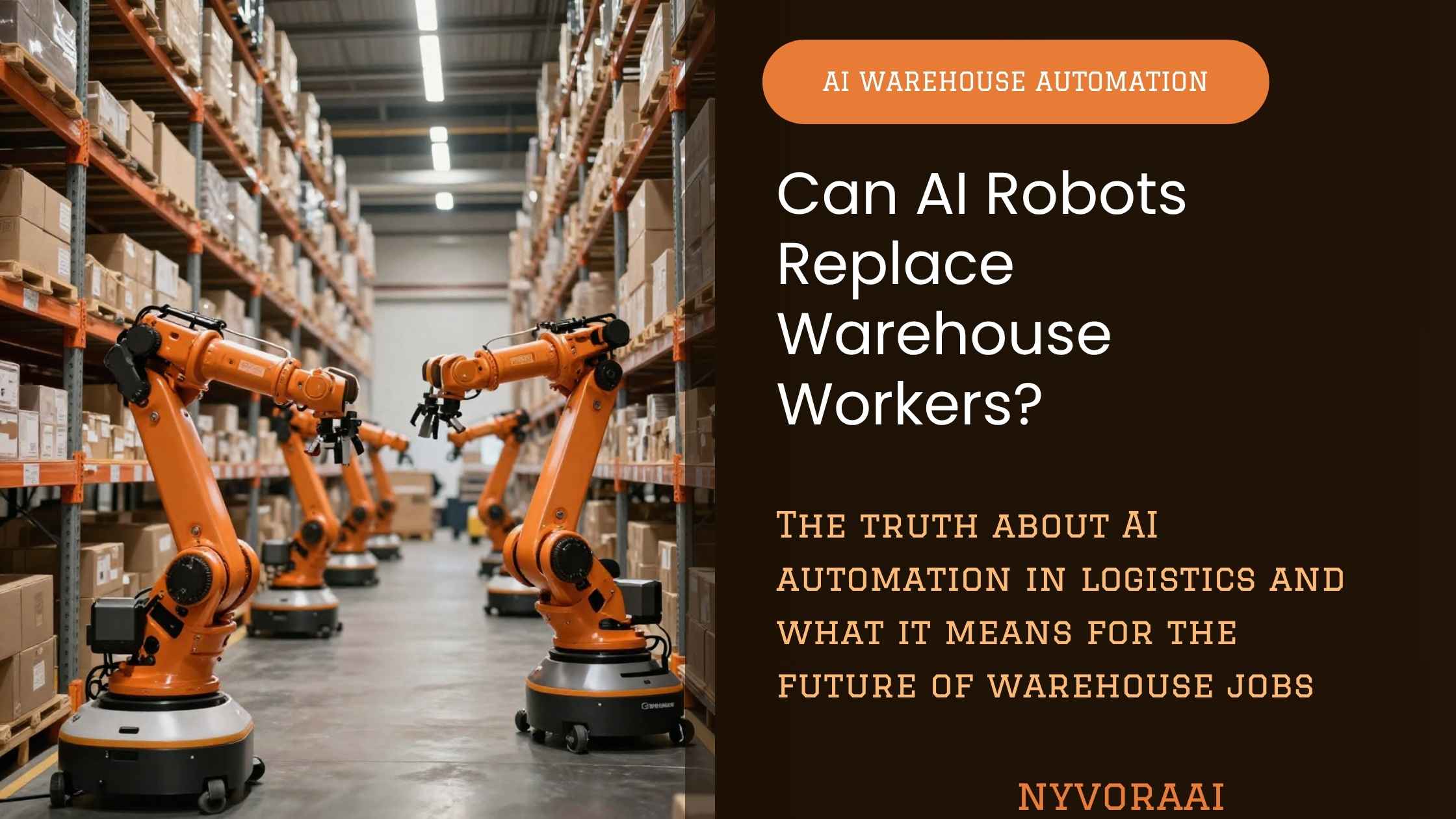
This dramatic shift has sparked a massive, often anxious debate across the logistics industry and the global workforce: can AI robots replace warehouse workers? The short answer is no, they are not replacing humans entirely. The nuanced answer is that they are aggressively replacing the tasks humans used to do, forcing a massive evolution in what it means to work in a warehouse.
In this comprehensive guide, we will explore the reality of warehouse automation, the types of robots taking over the floor, and how the human role is shifting from manual labor to fleet management. If you're curious about the latest breakthroughs, check out our latest news on AI robots in 2026 to stay ahead of the curve.
- Task Replacement, Not Job Replacement: AI robots are replacing repetitive, physically demanding tasks like picking, transporting, and sorting, but not the need for human oversight.
- The Rise of "Cobots": Collaborative robots are designed to work alongside humans, handling the heavy lifting while humans handle the complex problem-solving.
- New Job Creation: While manual picking jobs decline, new roles like Robot Fleet Coordinator, AI Maintenance Technician, and Exception Handler are skyrocketing.
- The Brain Behind the Brawn: The robots are just the muscle; understanding what is predictive AI in business is what actually directs these machines to the right aisles before an order is even placed.
01 The Reality of Warehouse Automation in 2026
To understand where we’re heading, we have to look at the bottlenecks of the past. For decades, warehouse efficiency was fundamentally limited by human walking time. Studies consistently showed that traditional warehouse workers spent up to 60% of their shifts just walking between aisles to find products. It was an incredibly inefficient use of human energy and talent.
Enter Goods-to-Person (G2P) automation, championed by industry leaders like Symbotic and Amazon Robotics. Instead of the human walking to the shelf, the AI robot brings the shelf to the human. This single shift in logic increased pick rates from around 100 items per hour to over 600. But the robots of 2026 are not just following magnetic tapes on the floor like their predecessors. They are equipped with LiDAR, computer vision, and edge computing, allowing them to navigate dynamic environments, avoid humans, and adapt to spilled pallets in real-time.
However, AI is not infallible. When a robot encounters a crushed box, a torn label, or an item that doesn't match its visual database, it freezes. It lacks the contextual understanding to say, "Oh, the label is torn, but I can see the product inside is the right one." This is where the human worker steps in to resolve the exception, proving that human intuition is still the ultimate failsafe in the supply chain.
02 Meet the Robot Fleet: Who is Working the Floor?
"Warehouse robot" is a broad term. In reality, the modern fulfillment center is a diverse ecosystem of specialized machines, each designed for a specific part of the supply chain puzzle.
03 The Human Element: Why We Still Need You
Despite the massive capital poured into these machines, the "lights-out" warehouse—a facility that runs 100% autonomously in the dark with zero humans—remains largely a myth, reserved only for the most standardized, single-SKU operations. Here’s why human intuition is still the ultimate failsafe in the supply chain.
1. Handling the "Long Tail" of Exceptions
E-commerce is messy. Customers return damaged goods, vendors ship items in the wrong boxes, and promotional displays require unique, non-standard packing. AI thrives on patterns and repetition; it struggles with chaos. When an exception occurs, the system flags it and routes it to a human. Often, this workflow is managed via a dashboard similar to what is AI customer support chatbot technology, where complex, non-standard physical exceptions are routed to human agents for immediate resolution.
2. Maintenance and Fleet Management
Robots break down. Batteries degrade, sensors get covered in dust, and software glitches occur. A warehouse running 500 AMRs requires a dedicated team of technicians to monitor fleet health, perform preventative maintenance, and physically extract a robot that has wedged itself under a fallen pallet. The robot is the tool; the human is the mechanic.
3. Quality Control and Empathy
While AI can scan a barcode, it cannot easily assess if a fresh produce item is bruised, or if a luxury handbag's stitching is flawed. Furthermore, when a high-value B2B client calls with a crisis about a delayed shipment, they want to speak to a human who can empathize, negotiate, and problem-solve, not an algorithm reciting a tracking number.
04 Calculate Your Warehouse Automation ROI
Implementing AI robotics requires a massive upfront capital expenditure. But the long-term savings in labor, accuracy, and throughput are undeniable. Use this calculator to estimate your potential return on investment.
05 The Evolution of the Warehouse Worker
The narrative that "AI will steal all the warehouse jobs" ignores the historical precedent of technological revolutions. The ATM didn't eliminate bank tellers; it changed their role from counting cash to selling financial products. Similarly, the AI robot is changing the warehouse worker from a "mover of boxes" to a "manager of machines."
New Roles Emerging in 2026
- Fleet Coordinator: Sitting in a control tower, this worker monitors the real-time telemetry of hundreds of robots, adjusting traffic patterns and reassigning tasks based on sudden surges in order volume.
- Robot Teardown Technician: A specialized mechanic who understands both mechanical engineering and basic software debugging to keep the fleet running at 99.9% uptime.
- Exception Resolution Specialist: The highly trained worker who handles the complex, damaged, or irregular items that the AI arms simply cannot grasp or process.
- Data Quality Analyst: Ensuring that the dimensional weight data and visual profiles of new SKUs are correctly uploaded to the AI's brain before they hit the floor.
The warehouse of the future is not devoid of humans; it is devoid of drudgery. By removing the need to walk 15 miles a day on concrete floors carrying 50-pound boxes, AI is actually making warehouse work safer, cleaner, and more intellectually engaging. The landscape of logistics technology is moving fast. To stay ahead of the curve and see how other industries are adapting to these shifts, be sure to check out our latest AI news for weekly updates on the future of work.
06 Challenges and Ethical Considerations
The transition to an AI-driven warehouse isn’t without its significant, very real hurdles. Business leaders and policymakers must navigate a complex web of challenges.
1. The Massive Capital Barrier
Equipping a 500,000 square foot facility with AMRs, robotic arms, and the necessary Wi-Fi 6 infrastructure can cost tens of millions of dollars. This creates a massive divide between e-commerce giants and small-to-medium 3PL (Third Party Logistics) providers who struggle to compete on speed and cost.
2. The Reskilling Crisis
While new, higher-paying technical jobs are being created, the workers currently performing manual picking jobs often lack the technical background to step into these new roles immediately. Companies face an ethical and practical mandate to invest heavily in reskilling and upskilling their current workforce, rather than simply firing them and hiring engineers.
3. Systemic Fragility
When a warehouse relies 100% on an AI-driven ecosystem, a cyberattack, a cloud outage, or a software bug can bring the entire global supply chain node to a dead halt. The reliance on technology introduces a new type of vulnerability that requires robust, redundant, and highly secure IT infrastructure.
07 Facility Readiness Checklist
Thinking about bringing robots into your facility? It is not as simple as unboxing a vacuum cleaner. The physical environment must be prepared. Use this interactive checklist to track your facility's readiness.
08 Frequently Asked Questions
Can AI robots completely replace warehouse workers?
What types of AI robots are used in warehouses?
Will warehouse jobs disappear in the future?
How does AI improve warehouse safety?
How much does it cost to automate a warehouse with AI?
Can AI robots handle irregularly shaped items?

Written by the NyvoraAI Team
We analyze the intersection of AI technology and the future of work. This guide was updated in June 2026. Have questions about warehouse automation? Contact our team or learn more about our mission.