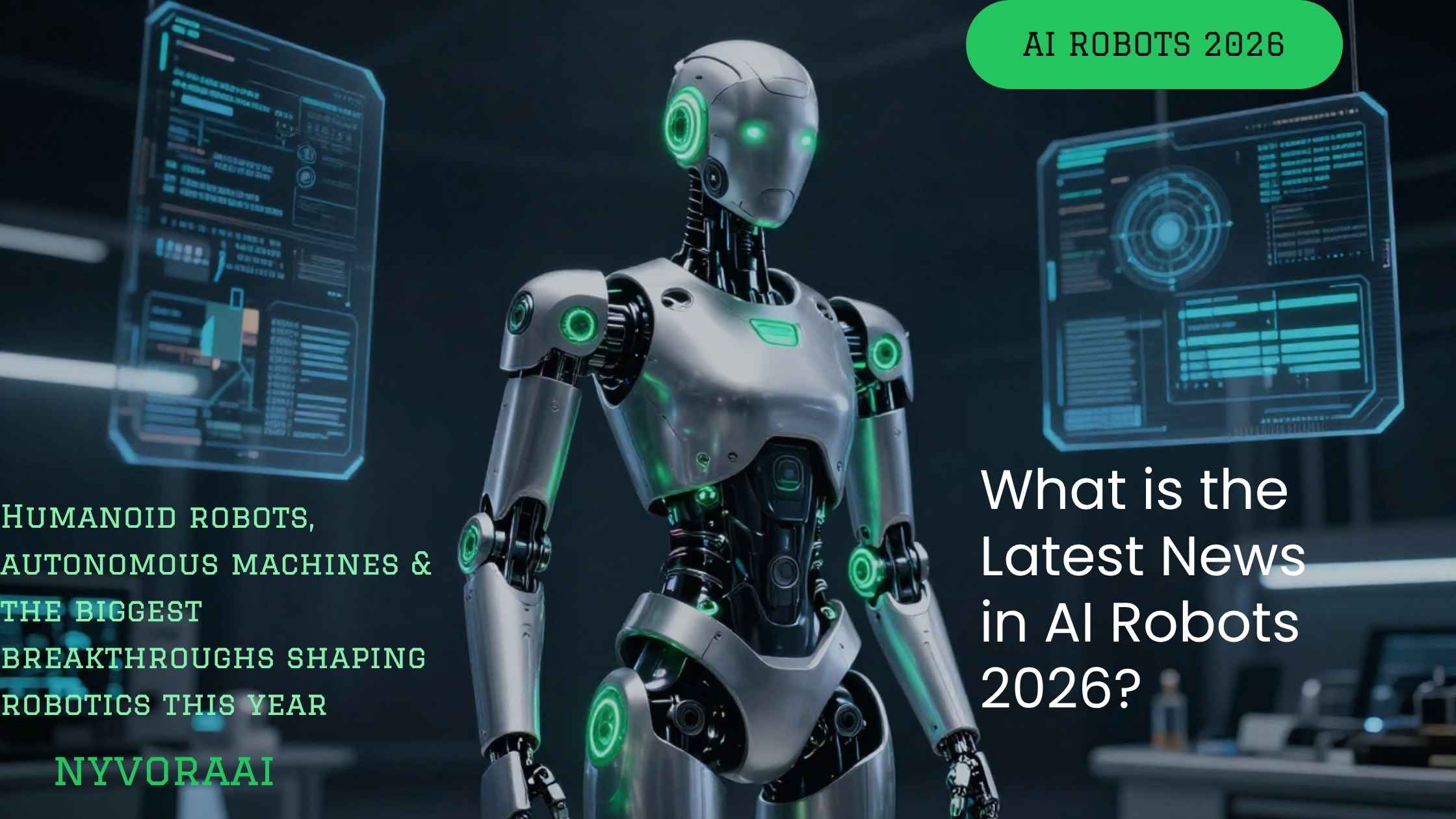
Let us be honest for a second: remember when robots were confined to the glossy, distant future of science fiction movies or clunky, caged arms on factory assembly lines? Those days are officially behind us. In 2026, AI-powered robots are walking through warehouses, serving coffee in bustling cafes, assisting surgeons in operating rooms, and yes, even folding laundry in homes across the globe. The question is no longer "if" robots will transform our world, but rather "how fast" and "in what deeply personal ways."
The latest news in AI robots 2026 reads less like a dry technical manual and more like a technological thriller. We are witnessing the beautiful convergence of advanced machine learning, vastly improved battery density, and sophisticated sensor arrays. Together, these innovations are creating robots that are not just mere tools, but genuine collaborative partners. From Tesla's ambitious Optimus program finally hitting production lines to Boston Dynamics reinventing Atlas with full electric power, the robotics revolution is no longer coming—it is already here, and it is profoundly human-centric.
- Tesla Optimus Gen-3 has officially entered mass production with a price tag of $20,000–$30,000, making humanoid robots commercially viable for everyday businesses for the very first time.
- Boston Dynamics' Atlas has gone fully electric, shedding its hydraulic legacy for advanced AI control systems and unprecedented agility tailored for complex industrial applications.
- Amazon now operates over 750,000 robots in its fulfillment centers globally, with new models capable of intricate, multi-step picking and packing tasks.
- Figure 02 and Sanctuary Phoenix are actively demonstrating general-purpose humanoid capabilities in real-world, unstructured commercial settings.
- Cost Reduction: The average cost of collaborative robots (cobots) has dropped by 40% since 2024, democratizing automation and making it accessible to small and medium-sized businesses.
01 Major Breakthroughs Reshaping 2026
The robotics landscape in 2026 is defined by several game-changing developments that have decisively moved the industry from experimental, lab-bound prototypes to practical, deployable, and reliable solutions.
The Humanoid Revolution Goes Mainstream
For decades, humanoid robots were the exclusive playground of elite research labs and flashy tech demos. In 2026, they are entering the workforce in meaningful, measurable numbers. Tesla's Optimus Gen-3 represents the definitive tipping point—finally achieving the reliability, safety, and cost-effectiveness needed for widespread commercial deployment. These are not just walking, talking gimmicks designed for viral videos; they are performing real, valuable work in manufacturing, logistics, and even sensitive healthcare settings.
But Tesla is certainly not alone in this race. Companies like Figure AI, Sanctuary AI, and innovative Chinese manufacturers like Unitree are all racing to capture market share in what leading analysts predict will be a $150 billion humanoid robot market by 2030. If you want to understand how these robots are being seamlessly integrated into modern business operations, exploring our broader AI News coverage will give you essential context on the automation trends driving this global transformation.
AI Control Systems Reach New Sophistication
The brains behind these machines have evolved just as dramatically as their physical bodies. Modern AI control systems can now process visual, auditory, and tactile information in real-time, allowing robots to adapt fluidly to unstructured, unpredictable environments. This is a massive, generational leap from the rigid, pre-programmed movements of previous robotic iterations.
The integration of large language models (LLMs) with robotic control systems means robots can now understand natural language commands and even engage in basic, contextual conversation. A warehouse worker can simply say, "Pick up the red box on shelf three and bring it to packing station two," and the robot understands, plans, and executes—no complex coding or specialized training required. As noted by researchers at MIT Technology Review, this natural language interface is the key to unlocking true human-robot collaboration.
How Modern AI Robot Control Works
This seamless pipeline allows non-technical workers to deploy complex robotic tasks instantly.
02 The Top AI Robots Making Headlines in 2026
Let us dive into the specific robots that are dominating the news cycle, capturing imaginations, and actively reshaping industries right now.
03 Industries Being Transformed by AI Robots
The impact of AI robots extends far beyond traditional manufacturing. Here is a closer look at how different sectors are being revolutionized right before our eyes:
04 What is Next: The Road Ahead
As impressive as 2026's developments are, we are still in the early innings of the robotics revolution. Here is what leading experts predict for the near future:
The $20,000 Humanoid Threshold
Tesla's pricing of Optimus at $20,000–$30,000 is highly significant because it crosses the psychological barrier where businesses start seriously considering robots as viable alternatives to human labor for certain tasks. As production scales and supply chains mature, analysts predict prices could drop to $10,000 by 2028, making humanoid robots as affordable as a compact car.
General-Purpose AI
The next great frontier is moving from task-specific robots to general-purpose systems that can learn new skills on the fly. Current research focuses on "foundation models" for robotics—AI systems trained on vast, diverse datasets that can adapt to new environments and tasks with minimal additional training, similar to how large language models revolutionized text generation.
Human-Robot Collaboration
Rather than replacing humans, the most successful deployments are focusing on deep collaboration. Cobots (collaborative robots) are designed to work safely alongside humans, handling the dangerous, dirty, and dull tasks while humans focus on creativity, strategy, and complex decision-making. This symbiotic relationship is proving far more sustainable and socially acceptable than full, blind automation.
Regulatory Frameworks
As robots become more prevalent in daily life, governments are scrambling to create comprehensive regulatory frameworks. Issues like liability for robot-caused accidents, data privacy, job displacement, and ethical AI decision-making are becoming urgent policy questions. The EU's AI Act and similar legislation worldwide will shape how quickly and in what ways robots are deployed globally.
05 Frequently Asked Questions
What is the latest news in AI robots 2026?
Which companies are leading AI robot development in 2026?
How much do AI robots cost in 2026?
Will AI robots replace human workers?
What skills do I need to work with AI robots?
Are AI robots safe to work around?

Written by the NyvoraAI Team
We track the latest developments in AI and robotics to keep you informed about the technologies shaping our future. This guide was updated in June 2026 with the latest industry insights. Have questions? Contact our team or learn more about our mission.